Meel
A mosque's accounts, off the paper register.
- What I did
- All the design. Built with Claude Code
- For
- Mosques and families in Kerala
- When
- 2025 – 2026
- Where
- meelapp.in
It started with my own fee
Every house in our mahallu pays the mosque a small monthly fee. One day I wanted to check what we owed and pay from my phone. I couldn't. Every rupee lived in one thick paper register, looked after by volunteers who already had jobs and families.
So the people I was really designing for were those volunteers. A lot of them avoid computers completely. If Meel took more effort than the register, they'd go back to the register. So every screen works with one hand, in as few taps as possible.
A Friday after Jumu'ah
Most people pay on Friday, right after prayers. They walk up to the committee table and say their name. Here's what happens next.
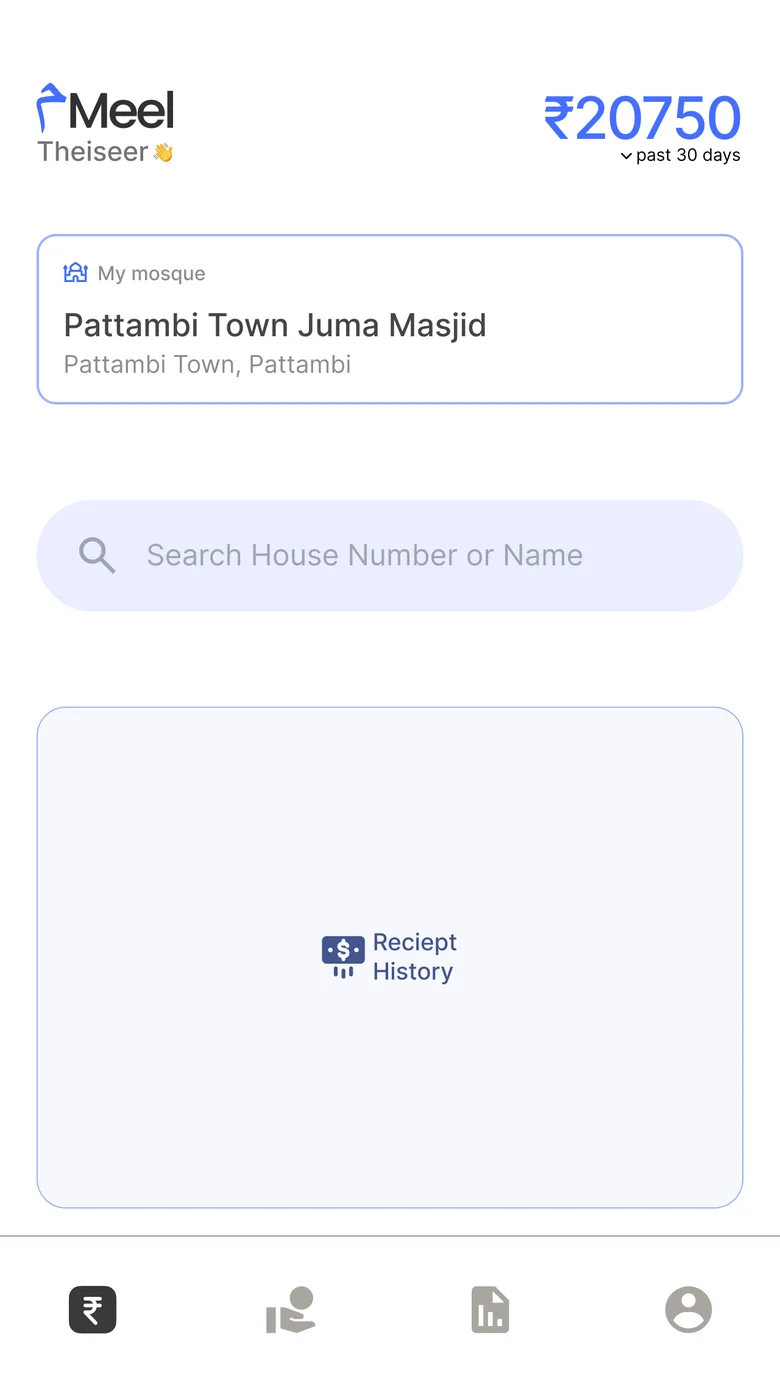
1The volunteer searches by name or house number.
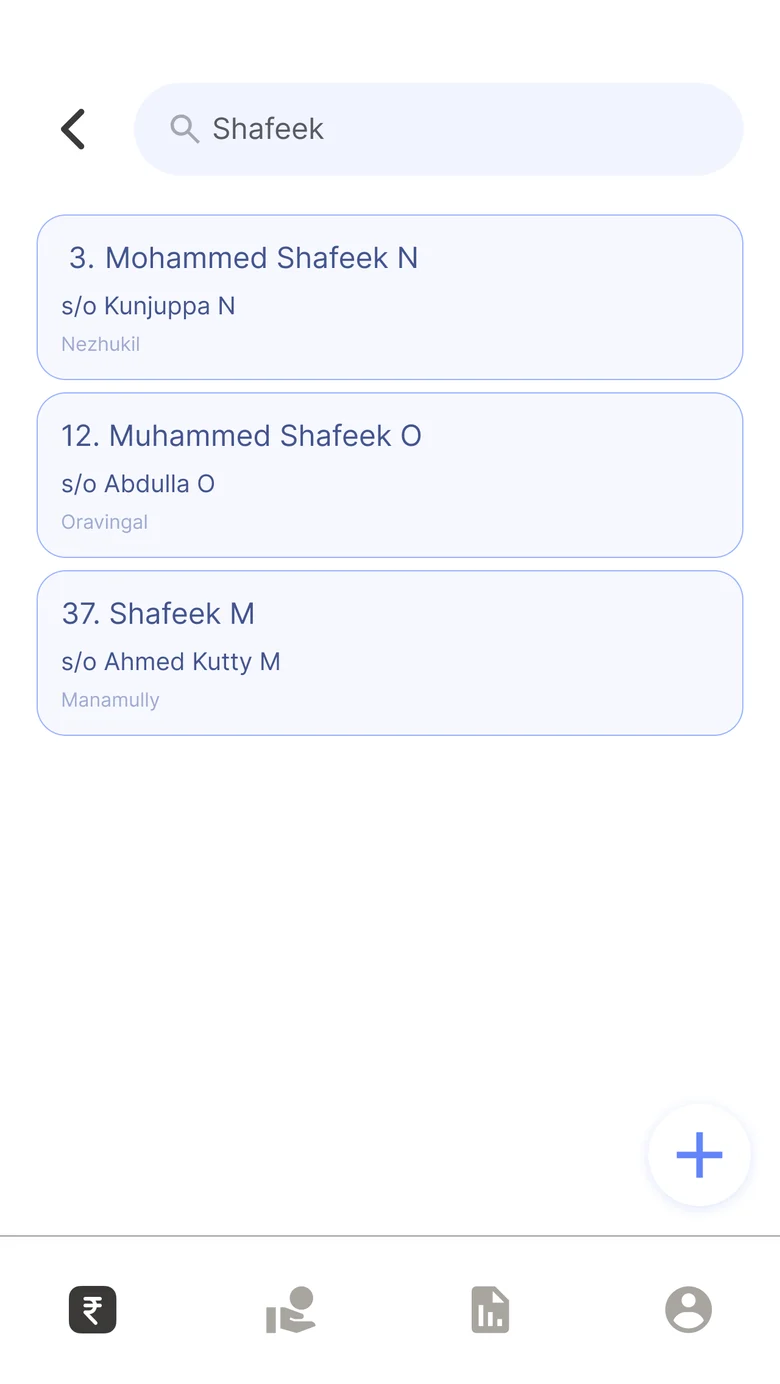
2Three people called Shafeek. The father's name under each one tells them apart.
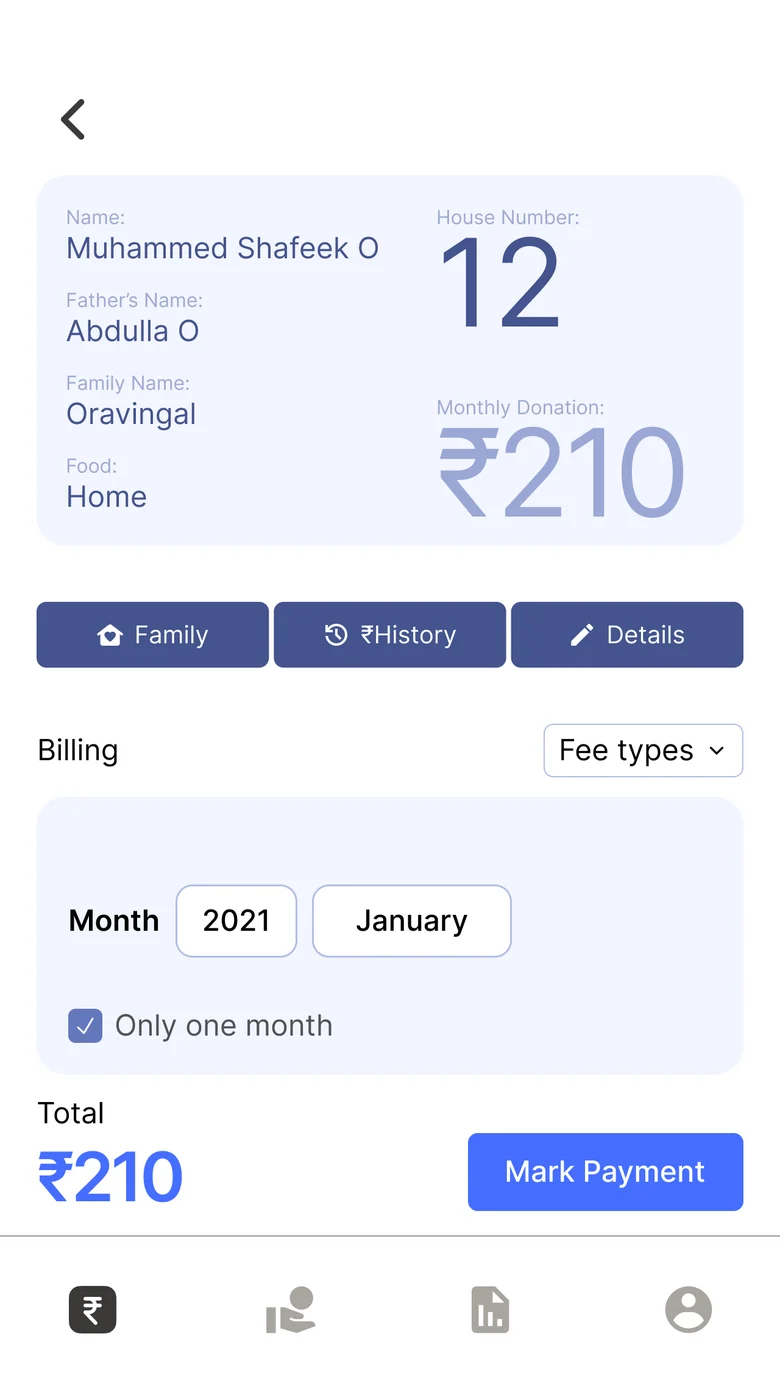
3The house opens with its number in large type, the way the register is organised.
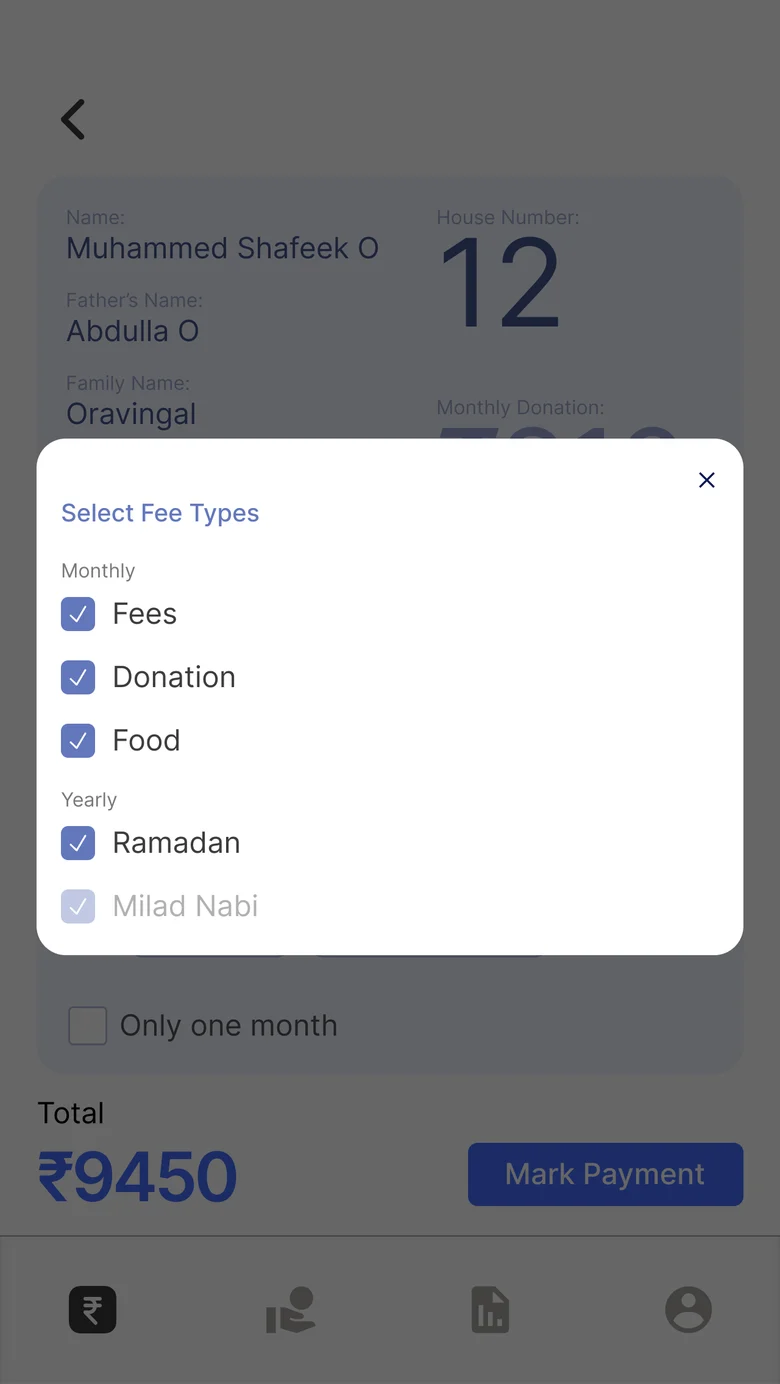
4They pick what is being paid today: the fee, a donation, the food fund or Ramadan dues.
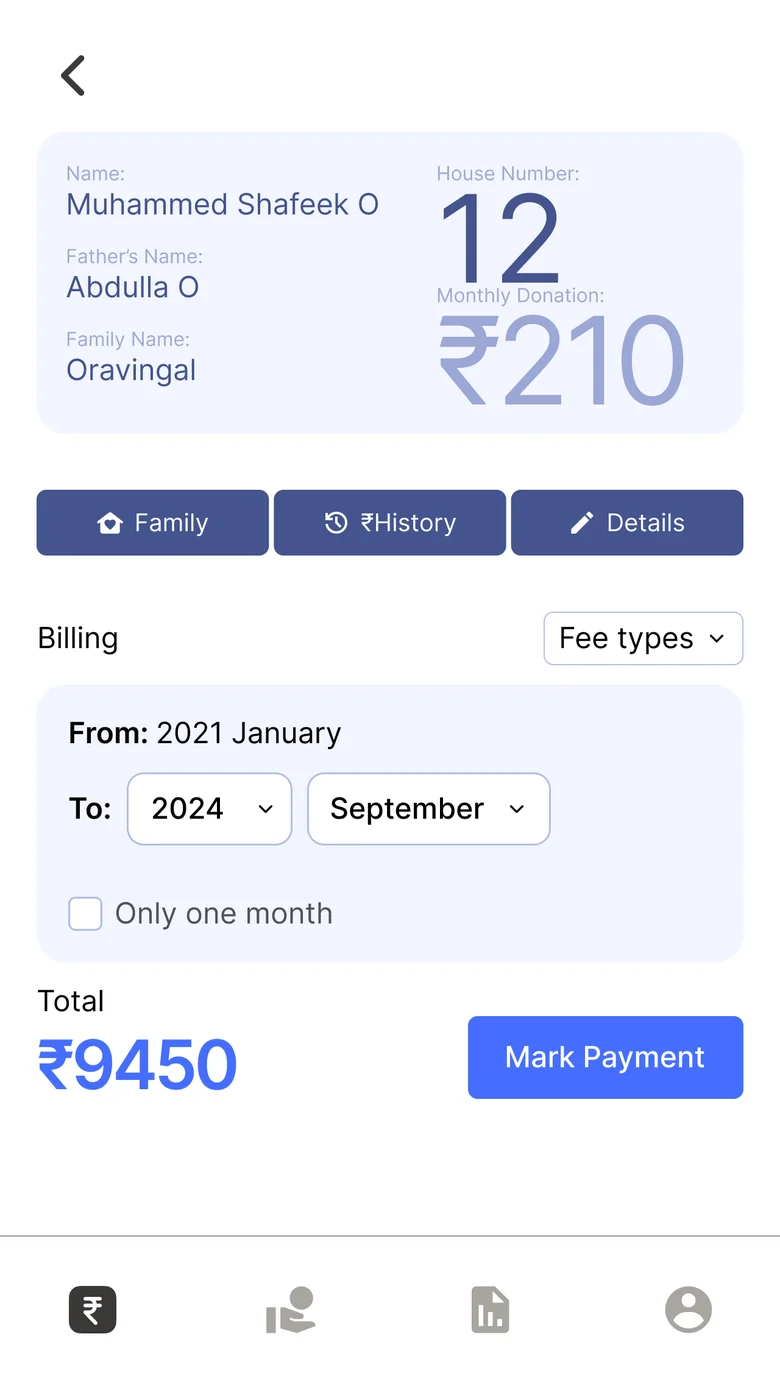
5This family is clearing everything since January 2021. The total updates before anyone taps.
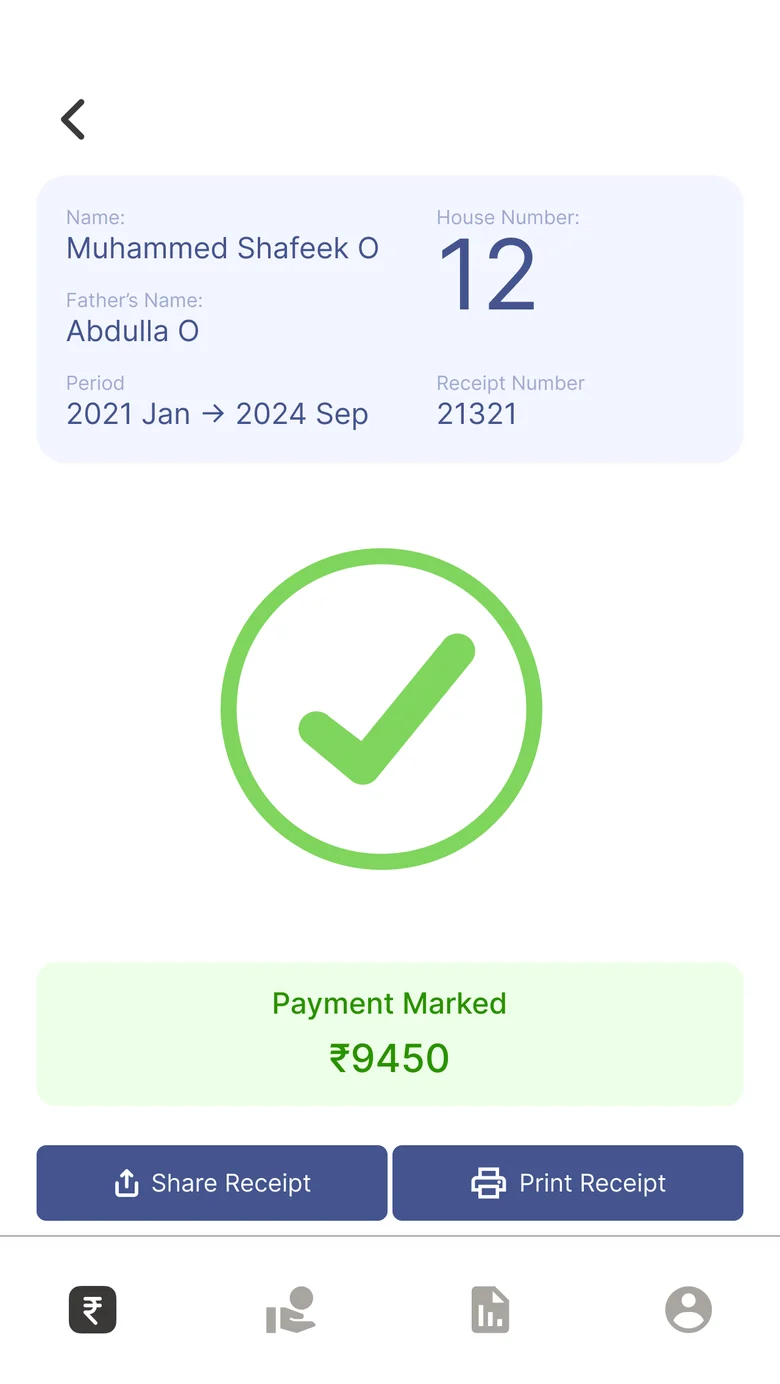
6Payment marked. The receipt goes out on WhatsApp or gets printed on the spot.
Swipe to follow along
Little things from how a mosque actually works
- 1
House numbers are unique. Names aren't: one mahallu can have three Muhammed Shafeeks.
- 2
A house can owe several things at once, and people rarely pay all of them together.
- 3
The range already ends at the current month, so most payments need no changes.
- 4
The total sits right next to the button, so nobody marks a payment without seeing the amount.
- 1
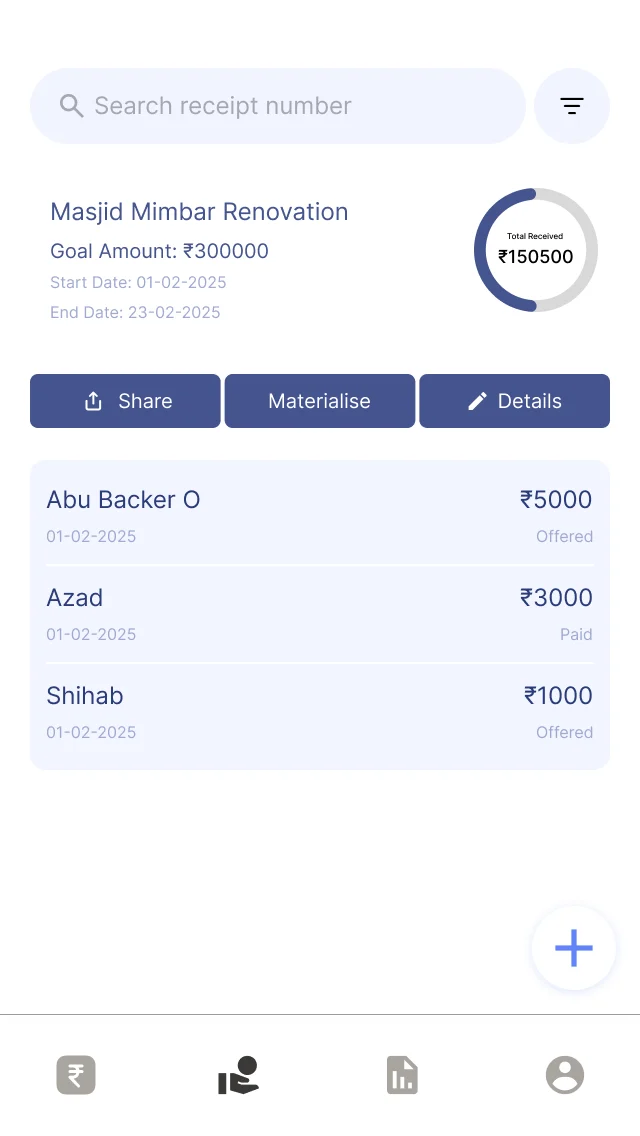
The ring shows how close a fundraiser is to its goal, without opening anything.
- 2
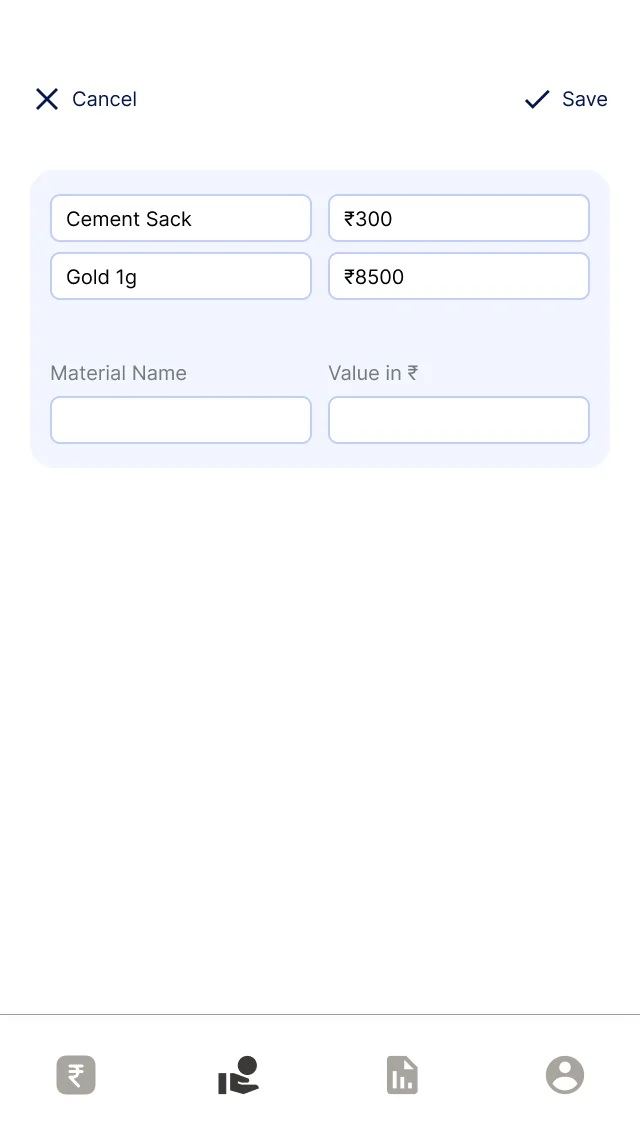
Some people give a sack of cement or a gram of gold. Meel records it with its value, so it counts too.
- 3
At a fundraiser, people promise first and pay later. Promised and paid stay separate, so nothing is counted twice.
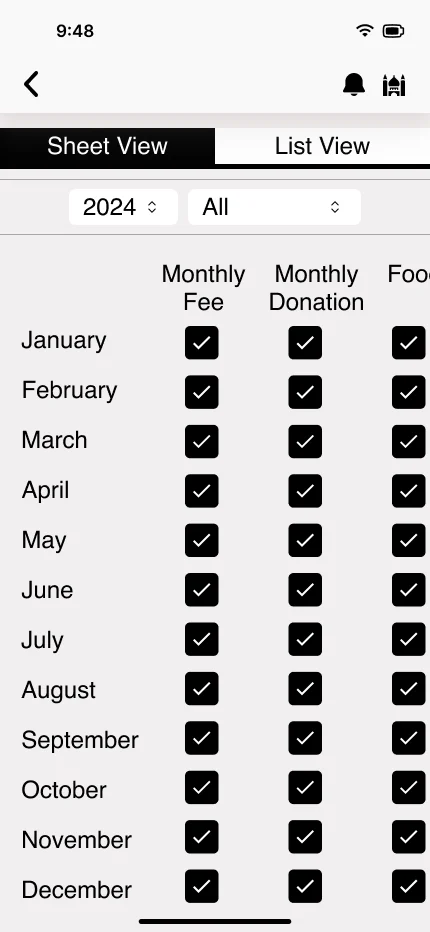
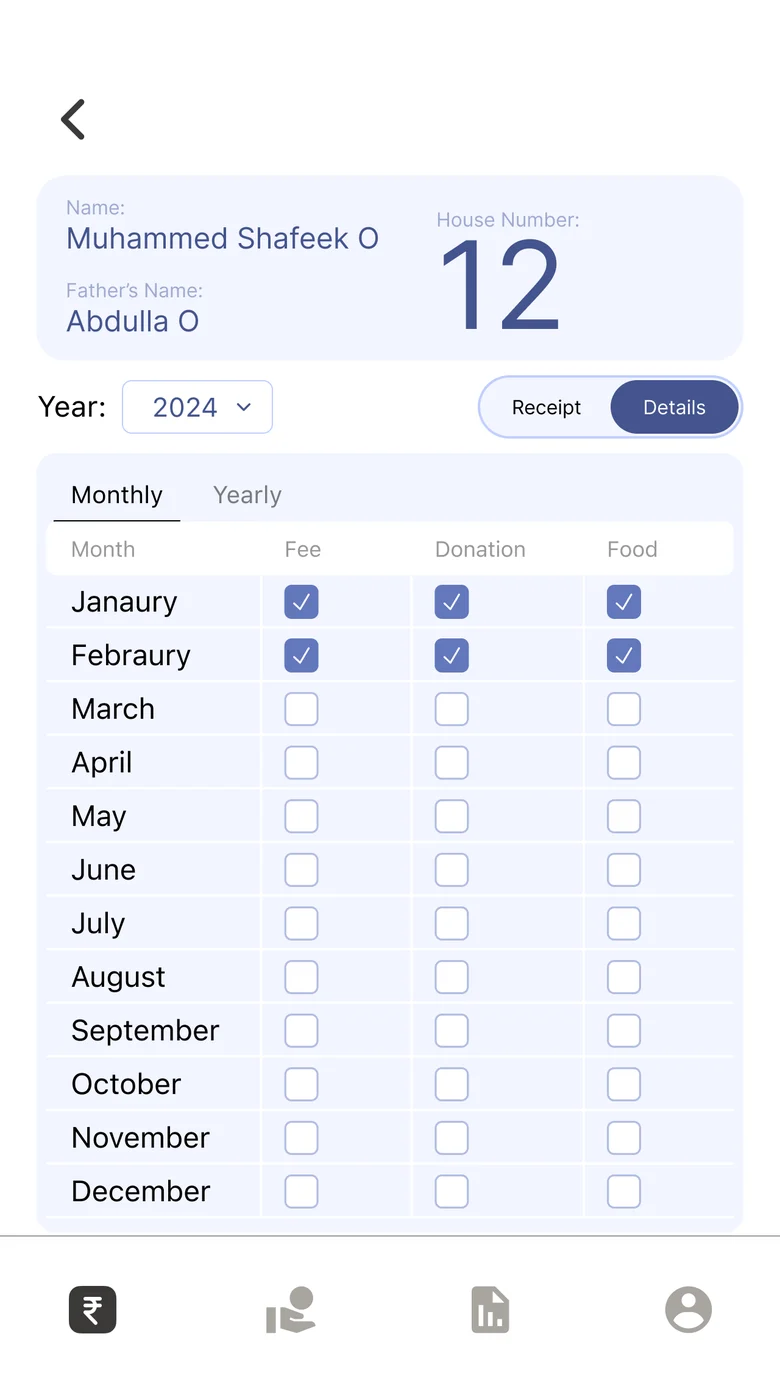
The register is a grid, so I kept the grid
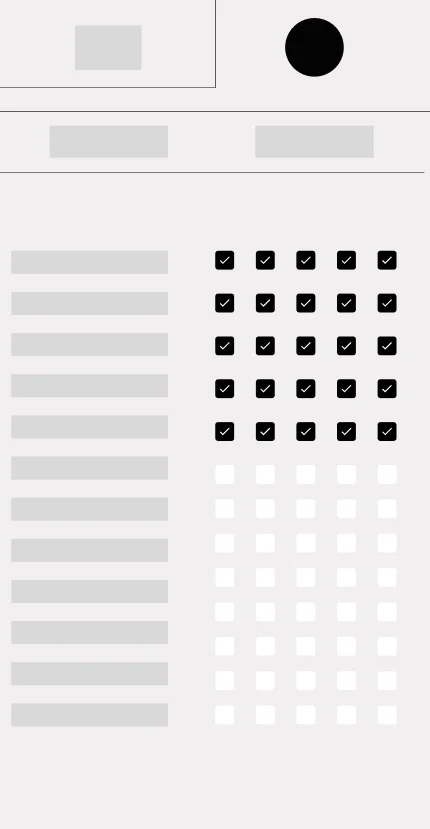
Months down the side, fees across the top, a tick for paid. Every mosque register I've seen looks like that. So Meel's register view looks like that too.
That way, switching doesn't feel like switching. A volunteer can hold the old page next to the phone and find everything in the same place. Leaving paper behind shouldn't feel scary.
What's next
Meel is complete, end to end. Online payments for families are built in, and it's ready for its first mosques.
The next phase is a small sales team to take it to mahallu committees across Kerala. Committees trust people they know, so we'll start close to home and grow one mosque at a time.